
I used to never think about socks. They were just... socks. Until one day I started paying more attention to what I was actually wearing every single day — and realized that small, everyday choices are exactly where conscious decisions matter most.
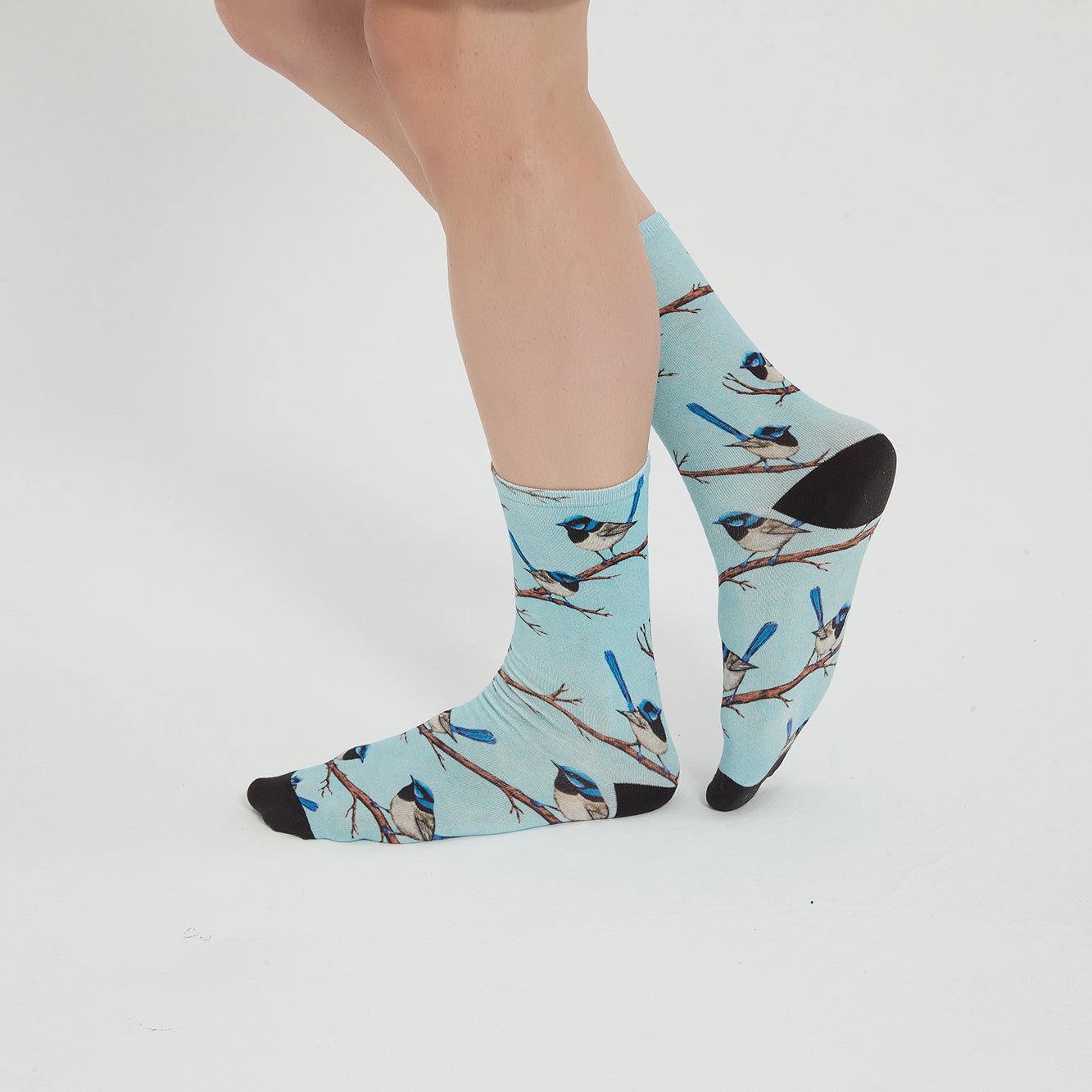
That's what led me to our bamboo-cotton blend socks. And honestly? It's one of those rare cases where the better environmental choice also just feels better.
Why bamboo changed how I think about fabric
Before I started looking into this, I had no idea bamboo was one of the fastest-growing plants on earth. It needs significantly less water than conventional cotton, and it can grow without heavy pesticides or fertilizers. That alone made me rethink what "resource-efficient" actually looks like in textile production.
So why not go 100% bamboo?
Here's the honest part: bamboo alone doesn't hold up well over time. Socks take a beating — repeated washing, friction, stretching — and pure bamboo fabric can lose its structure. That's where the cotton comes in. Not as a compromise, but as a deliberate design decision.
Bamboo fiber
Rapid-growing, low-water crop. Naturally temperature-regulating and gentle on skin.
Cotton fiber
Adds strength and resilience. Keeps socks holding their shape wash after wash.
What the blend actually does
I think a lot about balance in design — and this blend is a good example of it. Neither material is perfect alone. Together, they cover each other's weaknesses.
Better everyday comfort — the bamboo softness is immediate, and it doesn't fade after a few washes like synthetic materials sometimes do.
Less reliance on synthetics — polyester and nylon socks are everywhere, but they shed microplastics and don't biodegrade well. Natural fibers are a real step away from that.
Long-lasting without sacrifice — I've had pairs for over a year and they still hold their shape. That's the cotton doing its job quietly.
Sustainability isn't about perfection
I want to be real about this: no product is perfectly sustainable. There's always a tradeoff. But I've come to believe that better decisions consistently made matter more than the pursuit of a perfect solution that never ships.
Choosing natural fibers over synthetics is one of those small, concrete better decisions. It reduces environmental impact relative to the alternative. It's not the final answer — but it's a meaningful step in the right direction.

Leave a comment
This site is protected by hCaptcha and the hCaptcha Privacy Policy and Terms of Service apply.