
I grew up wearing whatever socks came in the six-pack from the supermarket. White cotton. Did the job. I never once thought about whether my socks were actually working with my climate — or against it.
Then I moved to Perth. And my feet had opinions.
Summer hit 42°C. My shoes became little ovens. By 11am I was already thinking about taking my socks off. It wasn't a comfort problem — it was a materials problem. And once I started paying attention, I couldn't stop.
Australia doesn't have one climate. It has about five.
This is the thing people forget when they talk about "the right sock." What works for a Melbourne winter doesn't work for a Darwin wet season. What's fine for a Canberra morning is completely wrong for a Brisbane afternoon. We live in one of the most climatically varied countries on earth — and our socks should probably reflect that.
Brutal heat
Breathability is everything. Sweat kills comfort fast.
Mild & golden
The sweet spot. Any decent sock works well here.
Cool & crisp
Warmth matters, but you still don't want sweaty feet.
Warming up
Temperature swings daily. Adaptability wins.
Here's what I've noticed: most sock brands are designed for moderate European climates. They're fine at 18°C. But Australia regularly laughs at 18°C. We go from "need a jacket this morning" to "why is the ground radiating heat at 3pm" in the same day — especially in Perth, Adelaide, and Melbourne.
Average summer highs by city
The summer problem nobody talks about
I'm going to say something obvious that took me embarrassingly long to actually act on: synthetic socks are terrible in an Australian summer.
Polyester traps heat. Nylon doesn't breathe. When you're sitting in an office or walking around outside and the temperature hits the mid-30s, you're essentially wrapping your feet in plastic bags. And that creates the perfect warm, damp environment for exactly the things you don't want — blisters, odour, irritation.
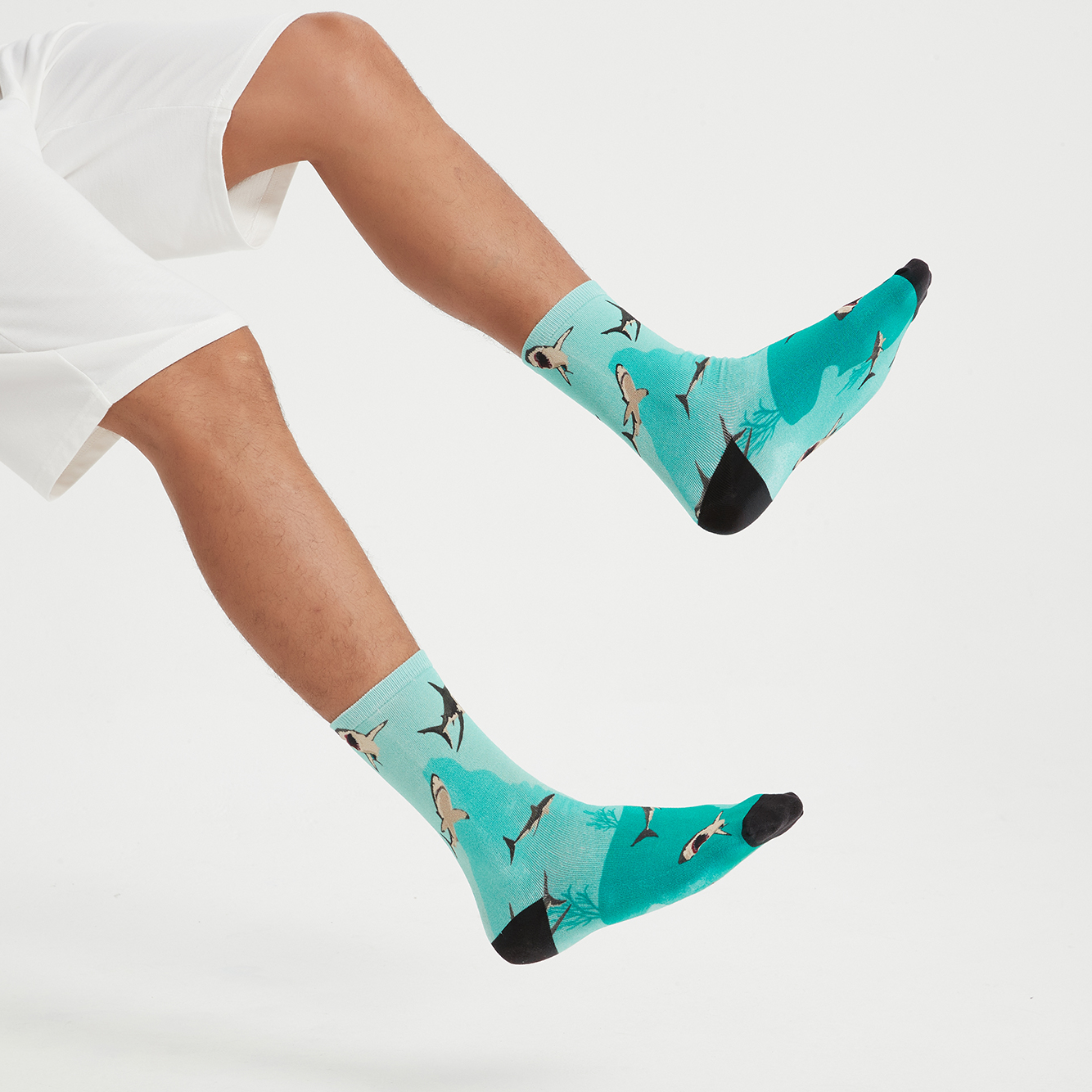
Bamboo fibers are naturally moisture-wicking. They draw sweat away from the skin and let it evaporate — which is exactly how your feet cool down. Combined with the structure that cotton adds, the sock stays breathable without going floppy or losing shape after a few washes.
But what about winter? (Yes, we have one.)
Australians get mocked overseas for complaining when it drops below 15°C. Fair enough. But that doesn't mean winter socks don't matter. Melbourne winters are genuinely cold and damp. Canberra gets frost. Even Perth has mornings where you want something with a bit more warmth underfoot.
Here's the thing I found: bamboo-cotton handles cooler weather better than I expected. The bamboo fibers are naturally temperature-regulating — they trap just enough warmth without overheating. It's not the same as a thick wool sock, and I'm not claiming it is. But for everyday wear indoors and in mild outdoor conditions, it does the job quietly and without fuss.
"The best sock for Australia isn't the warmest or the thinnest — it's the one that adapts to whatever the day throws at it."
— Something I wish someone had told me ten years agoWhat I actually look for now
After a few years of paying attention, here's what makes the cut for year-round Australian wear:
Breathability above all else — if a sock can't handle a 35°C day, it's not earning a place in my drawer. Natural fibers like bamboo genuinely outperform synthetics here.
Moisture-wicking that actually works — not just marketing language. Bamboo viscose pulls sweat away and lets it evaporate. Your feet stay drier, longer.
Temperature regulation — warm enough in winter, cool enough in summer. Bamboo's natural fiber structure does this without any synthetic intervention.
Shape after washing — cotton in the blend is what keeps the sock from becoming a floppy tube by week four. This is the unsexy detail that actually matters.
The honest summary
I'm not going to tell you that choosing bamboo-cotton socks will change your life. It won't. But I will tell you that in a country where your socks have to survive 42°C summers, unpredictable spring days, and damp winter mornings — the material genuinely matters more than you'd think.
Most people are wearing socks designed for somewhere else. Once you switch to something that's actually built for the conditions you live in, you realise how much low-grade discomfort you'd just been accepting as normal.
You don't have to think about your socks. That's the goal.

Leave a comment
This site is protected by hCaptcha and the hCaptcha Privacy Policy and Terms of Service apply.